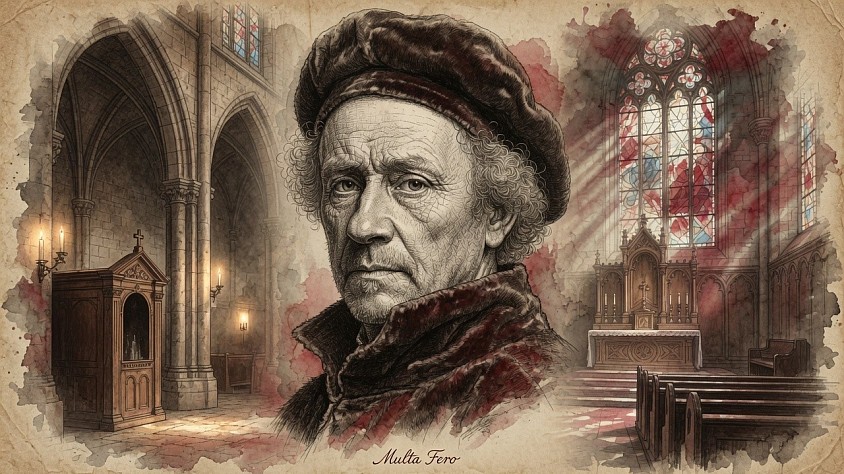
Mounting Debts
1651 - 1654
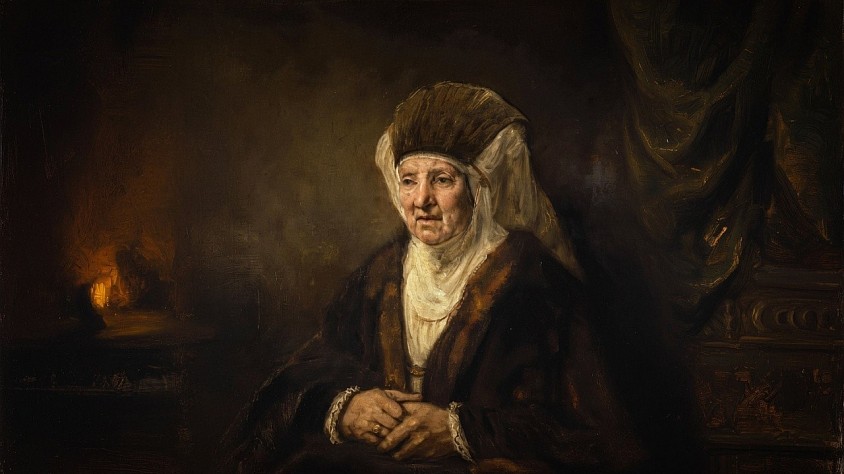
Portrait of an Old Woman (1554)
I hang between cloud and mast-head while Westminster’s ink is still wet and the Channel already hunts again. Two republics have clasped hands on parchment; their privateers have not. Navigation Acts close on Dutch keels like a second fleet. Grain rises, silk hesitates, luxury stalls shrink. Johan de Witt draws the future with compass and ruler; the Act of Seclusion whispers that no Prince of Orange shall wear the stadholder’s cloak. History files the whisper among documents that later become graves.
The East India hulls still sail; the Bank still works its daily miracle. Yet the burgher counts his guilders twice. After 1654 the picture-market knows satiety. Taste slides toward Italian smoothness; wounded shadow meets a shorter purse. Consistories admit no twilight. Amsterdam swells toward two hundred thousand souls while a sixth of the city lives in fear of falling.
I lower my gaze to one house. Number four, Sint-Anthonisbreestraat, bought in 1639 for thirteen thousand guilders already larger than prudence. Saskia is absent. Hendrickje and the boy remain. Grandeur and insolvency share the same floorboards.
In the upper atelier light hangs like pulverized gold. Rembrandt stands before the plate of The Blindness of Tobit: the old man stumbles, the wheel topples, the doorway waits. Hendrickje enters with beer and bread. “The acid does not care whether the hand is steady.” He answers that blindness is the price of the return. Inside him the thought turns: she stays though the church will name their love whoredom, though Saskia’s will forbids marriage without stripping Titus.
Clement de Jonghe arrives early, hat in hand, speaking of uncertain times and plates that should not be scattered. Rembrandt etches deeper shadow under the brim and changes the subject.
He plants himself before the mirror for the unidealized self-portrait, hands on hips, paint laid in the broad manner. A note from Six buys a month. Geertje writes from confinement; Adriaen is dead in Leiden. He works La Petite Tombe, then Aristotle’s gold chain against Homer’s blind brow, then scrapes The Three Crosses into deeper night so that one beam still cuts the chaos.
Summer 1654. Hendrickje is rounded with the child who will be Cornelia. The consistory summons her four times. On the twenty-third of July she stands before the elders and does not deny the charge. She accepts the bar from communion and refuses the name of whoredom. He paints Bathsheba from her living body: the letter against the thigh, the interval between reading and consequence. In October they baptize the daughter at the Oude Kerk. By torchlight he etches the Descent from the Cross.
The house still stands. The plates go out carrying shadow and radiance. Destiny elevates the private wound into the universal. In every age the night is vast; in every age the lantern refuses to be extinguished.