
The Last Canvas
1667 - 1669
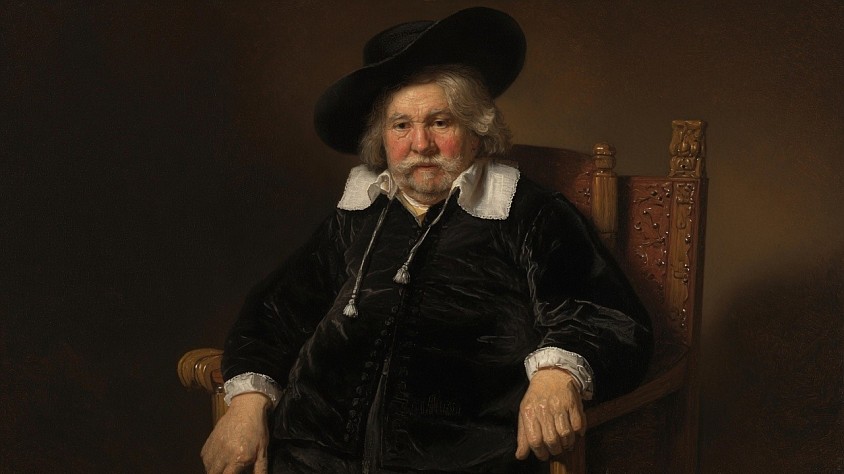
Portrait of an Elderly Man (1667)
Behold two years and ten months in which a republic of merchants and one stubborn hand occupy the same breath. I who have counted the heartbeats of empires now watch Amsterdam from 1667 to October 1669.
What is fortune at its summit if not an accident balanced on water? Canals flash like drawn swords. Warehouses groan with pepper, porcelain, and souls entered in the same ledger. Already the gold is adulterated. Louis XIV hurls fifty thousand into Flanders. Dutch fire turns the Medway into a cemetery of English oak. Breda is signed; nutmeg stays Dutch, New Netherland does not. A paper Triple Alliance is knotted against a flood. Candia falls in the painter’s last year. Westphalia is already grey.
Amsterdam calculates. Taste grows prudent; the experimental soul prefers courtly finish. Prices for new canvases fall. Science grinds glass a morning’s walk away.
The house is not a palace. It stands on the Rozengracht, opposite the Doolhof: rented, low-ceilinged, tiles that remember children’s games. Hendrickje has been three years in the earth. Fame and insolvency share the same cracked plates. In December 1667 a Medici prince crosses the threshold, names the occupant famous, and departs. The light that enters is the same northern light that once filled a grander house; it has never needed to be rich in order to be absolute.
Titus, twenty-five, keeps the ledger against circling creditors. Cornelia, thirteen, tends the draughts. In February 1668 the son marries Magdalena van Loo in the Nieuwe Kerk. Hope arrives thin as late spring. By September the plague takes him. Three days later the Westerkerk receives another of the family. The old man returns to the Prodigal Son: two hands—one broad, one almost maternal—close upon the kneeling boy. Mercy is painted because living arms can no longer give it.
March 1669: a granddaughter, Titia, is baptized. Rembrandt stands witness, pigment still under the nails. He works the last self-portraits and an unfinished Simeon who holds the Child as if the holding were the last act before departure. On the fourth of October he does not rise. Sixteen bearers carry him to a rented kerkgraf that costs fifteen guilders. No stone records the place.
Reader, grandeur and misery sit at the same table. The infinite hunger of the spirit is locked inside unpaid rent and a grave a few hundred paces distant. The age watches him. He, without knowing it, watches the age. In that mutual gaze lies the whole tragedy, and the whole glory, of our condition. The light is beautiful. The dust is inevitable. The hand refuses to smooth the truth.
