
The Amsterdam Treshold
1631 - 1634
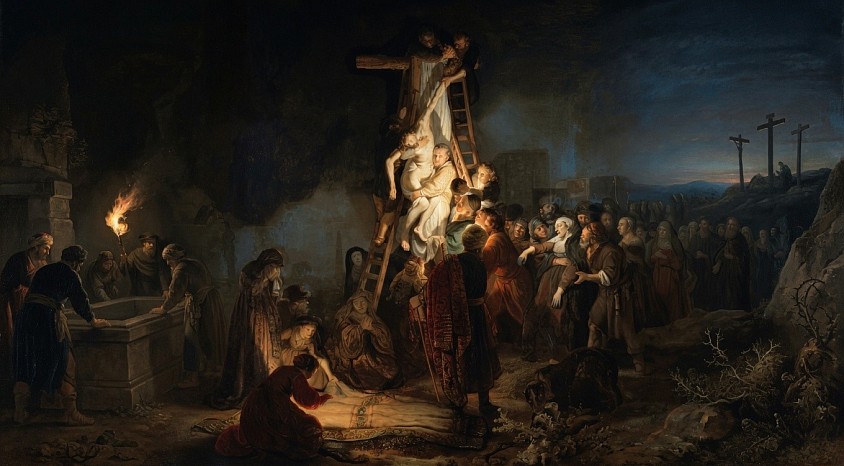
Descent from the Cross (1634)
Time presses its full weight upon Amsterdam in 1631. Canals, hoist-beams, and ledgers are forced to yield their secrets while the Hanseatic League dies in hollowed Lübeck warehouses. Dutch fluits slip past the old staple ports; the moedernegotie feeds the Republic with rye dust and peat-smoke salt.
Into this charged air the Waterlander Mennonites move with sober calculation. Deacon Cornelis Claesz carries surplus funds to Hendrick van Uylenburgh’s house on the Sint Antoniesbreestraat, seeking shares in Riga timber ships. The dealer’s rooms smell of varnish and ground pigment; principle thins under prosperity.
Rembrandt arrives at twenty-five, still marked by Leiden yet hungry for a larger stage. Uylenburgh demands portraits that make the merchants’ triumph flesh without falsehood. Rembrandt answers simply: “I can.” The light itself has grown more exacting.
Within weeks Nicolaes Ruts sits in sable and ushanka, his face scored by Archangel winters. Truth, not flattery, is demanded. The finished portrait records both the wild beauty of the fur and the calculating eye that turns it into wealth.
In 1632 the Surgeons’ Guild commissions the anatomy lesson of Dr. Nicolaes Tulp. Around the body of the executed Aris Kindt, Rembrandt gathers the living in dramatic attention rather than formal rank. Light falls equally upon the dead flesh and the searching faces; knowledge and mortality confront each other without disguise.
Commissions follow in a torrent. Nearly fifty portraits in four years. The miller’s son has stepped fully into the merciless northern light.
