
Triumph and Loss
1635 - 1638
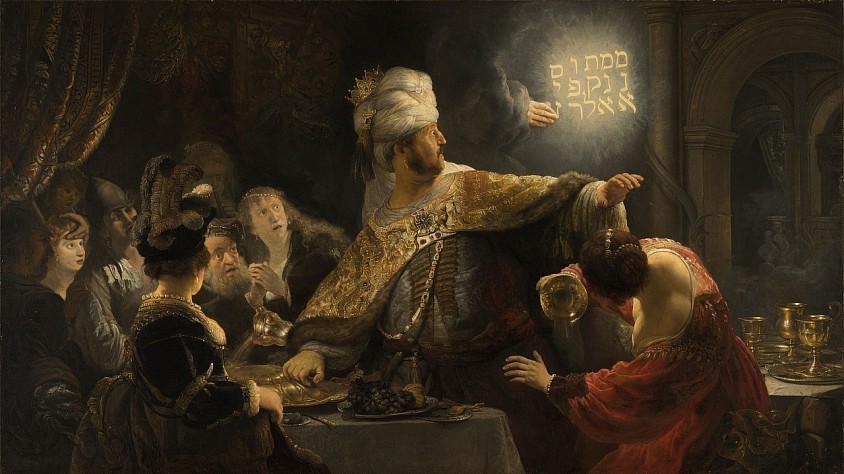
Belshazzar's Feast (1636)
Look upon man: a brief flicker between two infinities who, from mud and mineral, captures the invisible soul. In the decade when Europe tore itself between feudal dogmas and rising trade, Holland—half land, half defiance—rose from North Sea fog to mistress of the oceans. Amsterdam, built on wooden piles driven into the mire, became the hive of the moedernegotie: Baltic grain, Oriental spices, silver florins, and Calvinist ledgers.
Yet even here the soul sought answers not in banks but in the resin-scented workshop of a Leiden miller’s son. In the spring of 1633 golden light pierced Hendrick van Uylenburgh’s Breestraat studio. Apprentices ground lapis and bone black while the city roared outside. Into this ordered clamor stepped Saskia van Uylenburgh, twenty-one, orphaned Frisian patrician, cool-skinned and luminous against the sallow merchant faces.
Rembrandt, twenty-seven, felt the air change. Their eyes met across rank and commerce; spirits recognized one another. She asked whether he conquered with the brush or was himself conquered by the light. He answered that he was both, and invited her into that double bondage. On 5 June 1633 they were betrothed in Friesland; three days later he drew her in unforgiving silverpoint, noting the day they were married. A year later the union was sealed.
Saskia entered his art as muse and living altar. Wealth followed; they collected armor, prints, and Oriental treasures with reckless joy. He painted them both as the Prodigal Son in the Tavern. Hendrick watched with pride and dread; the partnership dissolved. Independence was claimed.
Then the cradles emptied. Three infants—Rumbartus, Cornelia, Cornelia again—descended the stairs in tiny coffins within five years. Titus alone survived. Consumption already fed upon Saskia. Sorrow consecrated the genius: the swaggering daylight of youth yielded to abyssal chiaroscuro. He ceased to paint gods and began to paint man.
