
The Miller's Son
1606 - 1626
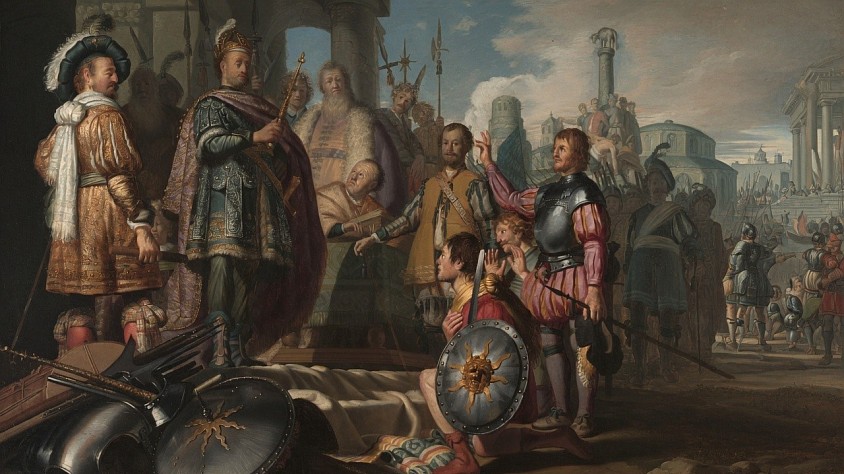
Palamedes before Agamemnon (1626)
The Eternal Observer opens the ledger of 1615 Leiden. Beneath the turning sails of De Rijn, nine-year-old Rembrandt Harmenszoon stands marked by mill dust—necessity’s reluctant skin. In the stratified air of the Weddesteeg house, light chooses: Gerrit’s scars turn silver, Machtelt’s soft cheek becomes a brief moon, Neeltgen’s weary eyes hold the weight of every loaf. The boy steals charcoal, records the thief of faces, and hides the studies.
Harmen, practical miller and Reformed pillar, burns the papers: light puts no bread on the table. Neeltgen, still Catholic, presses fresh charcoal into her son’s palm after dark. The household becomes a miniature Republic—discipline versus contemplation, grain versus vision.
Leiden, risen from siege, thrives with university, drapers, and charity. The same city shelters English Separatists who soon depart for the Mayflower while the miller’s son crosses the Langebrug threshold. Jacob van Swanenburgh, returned from Naples with hell-fires and Italian chiaroscuro, teaches dead colour, translucent shadows, and the relative soul of ochre. Rembrandt copies the artificial flames only to turn them upon living faces.
Later, under Pieter Lastman in Amsterdam, the grammar deepens into concentrated light and mobility. The boy who once watched light choose a scar will compel the world to stand still before the souls he rescues from disappearance.
